
Sensing across the
Humanities, Sciences and Arts
Recap of the Opening Day of the OLFAC Symposium
at the ifk, Vienna
DAY 1 – Atmospheres Unfold
The first day of the OLFAC Symposium carried a sense of anticipation for what smell—still often relegated to the margins of scholarship—might enable when placed at the centre of research, artistic practice, and scientific investigation.
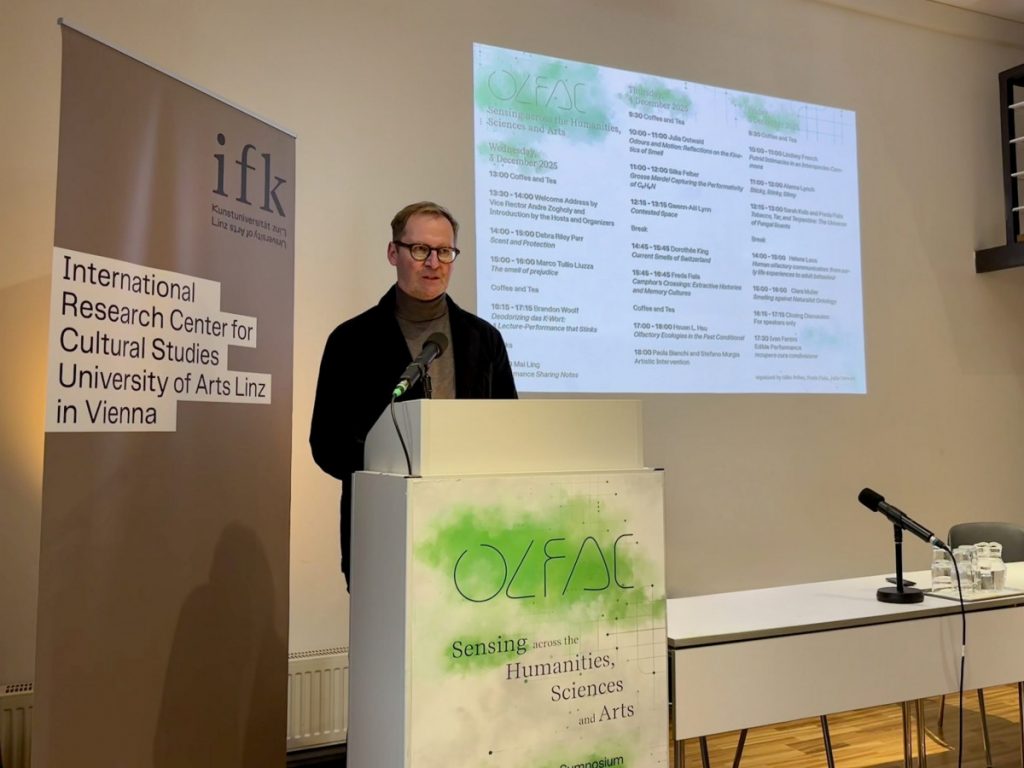
Thank you Andre Zogholy, Vice Rector of the University of Arts Linz, for your kind opening address and welcoming our guests!
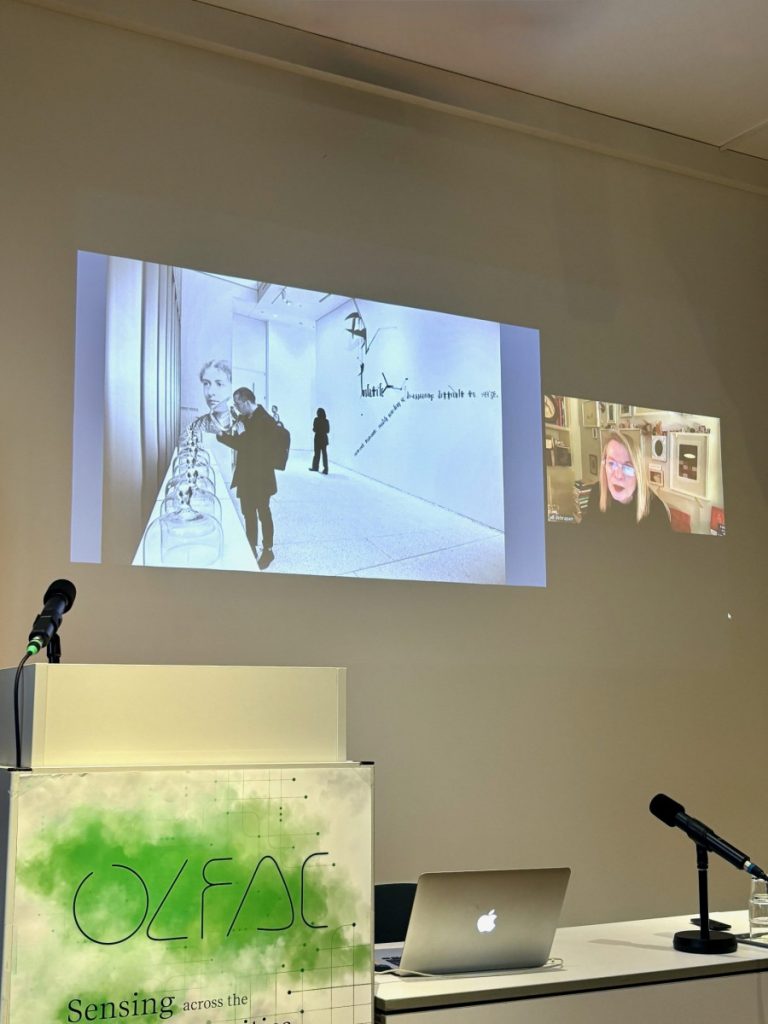
To open the programme, Debra Riley Parr (Chicago)—one of the key voices shaping contemporary olfactory studies in the arts—joined via livestream to speak on Scent and Protection. Her lecture traced how smells have historically been deployed to ward off disease, danger, and uncertainty—from medieval plague remedies to modern practices of burning fragrant materials for cleansing or protection. Drawing on art history, environmental thought, and modern museum and heritage politics, she opened up the question of how olfactory practices persist as techniques of coping, care, and collective imagination. Her lecture implicitly asked: What forms of protection are carried in the air we cultivate?
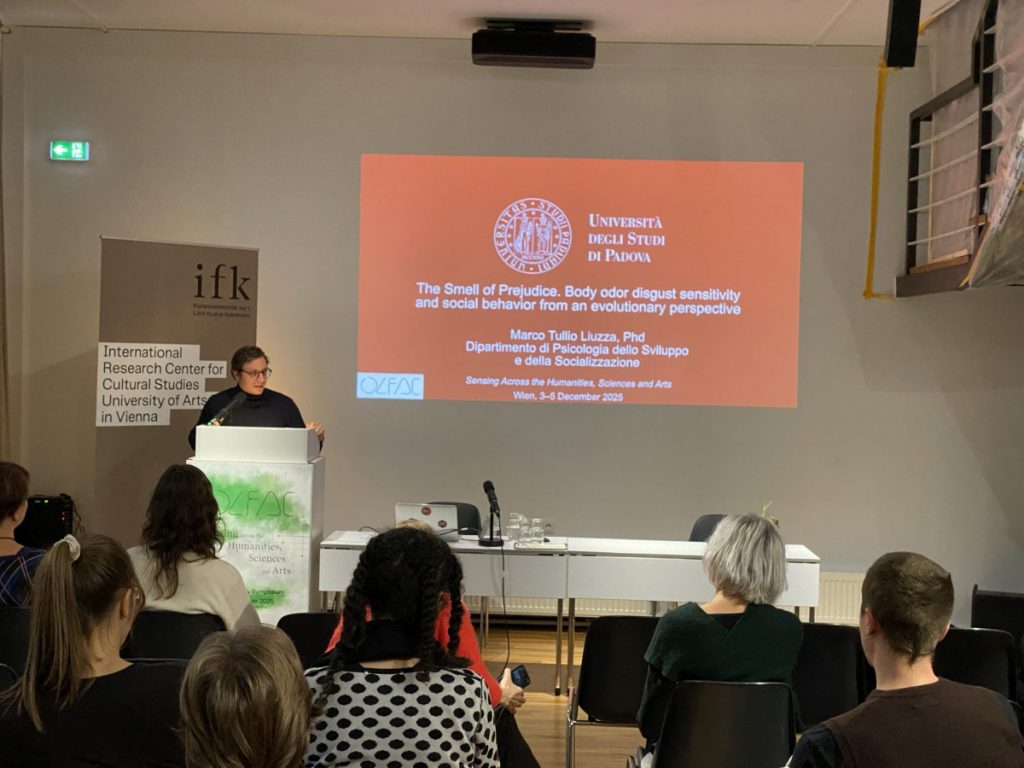
From here, the programme shifted from cultural history to cognitive science. Marco Tullio Liuzza (Padova), known for his work at the intersection of psychometrics and olfactory perception, presented The Smell of Prejudice. His talk examined how sensitivity to body-odour disgust correlates with exclusionary social attitudes—an unsettling reminder that olfaction participates in processes of boundary-making, and that scientific inquiry itself must grapple with the social assumptions embedded in these mechanisms.
The day then moved decisively into performative terrain. Brandon Woolf (New York) offered a lecture-performance entitled Deodorizing das K-Wort: A Lecture-Performance that Stinks. Known for his activist-theatrical practice, Brandon re-situated the social politics of garlic—in particular its mobilisation as a derogatory marker for racialised and marginalised groups—into the Viennese intellectual landscape.
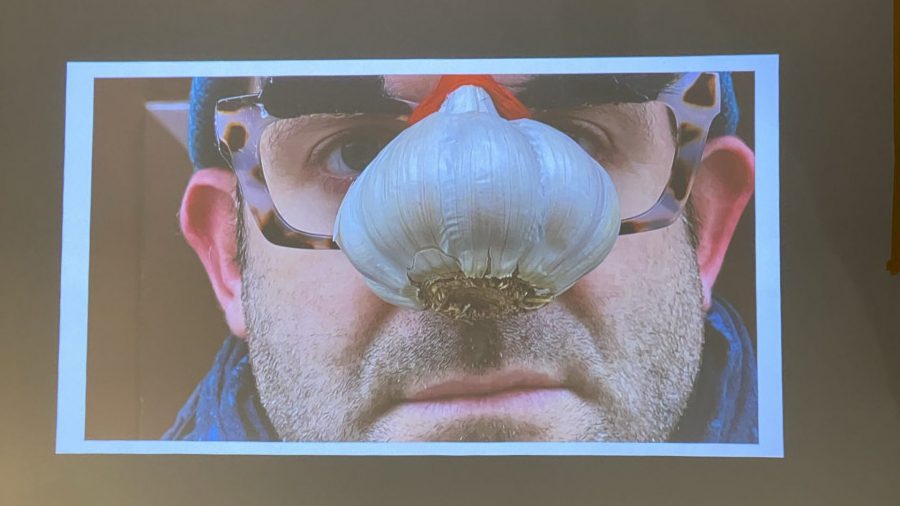
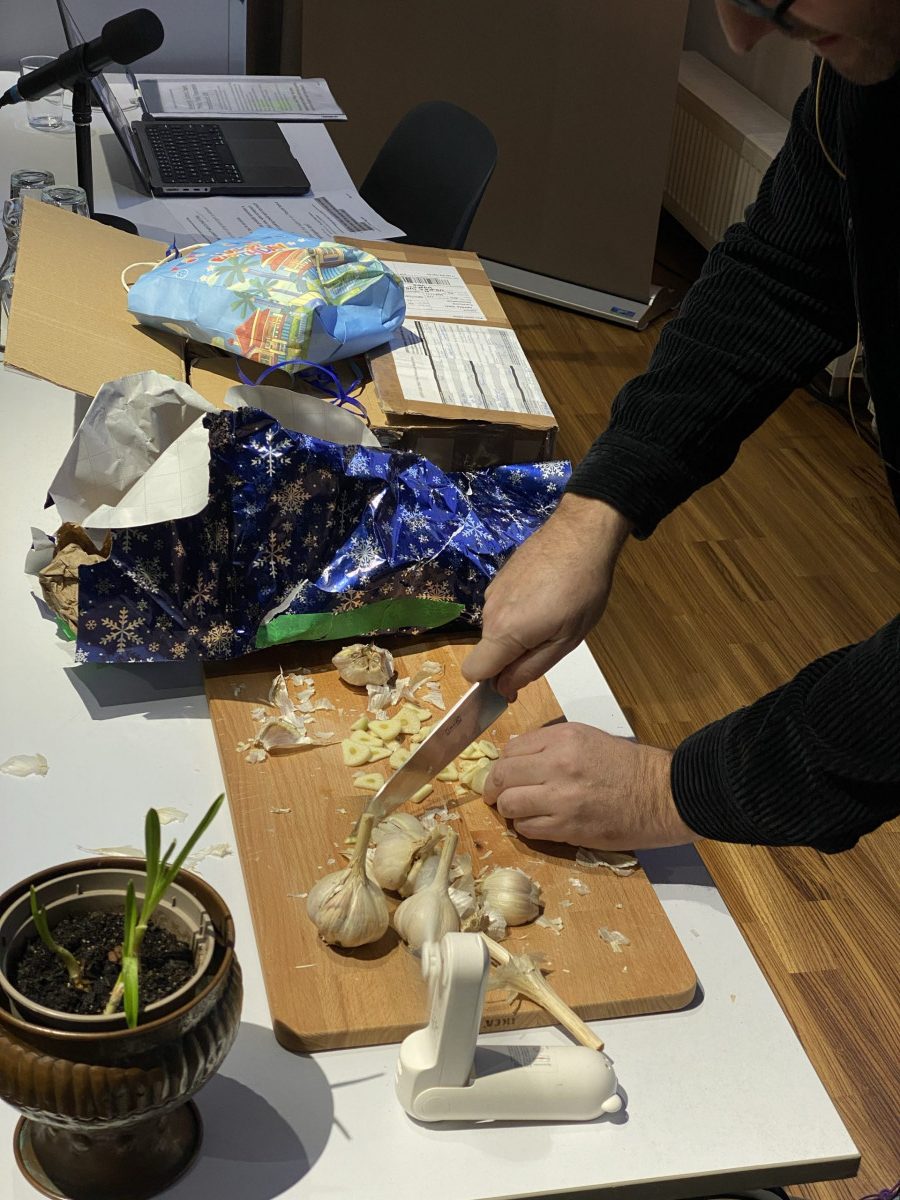
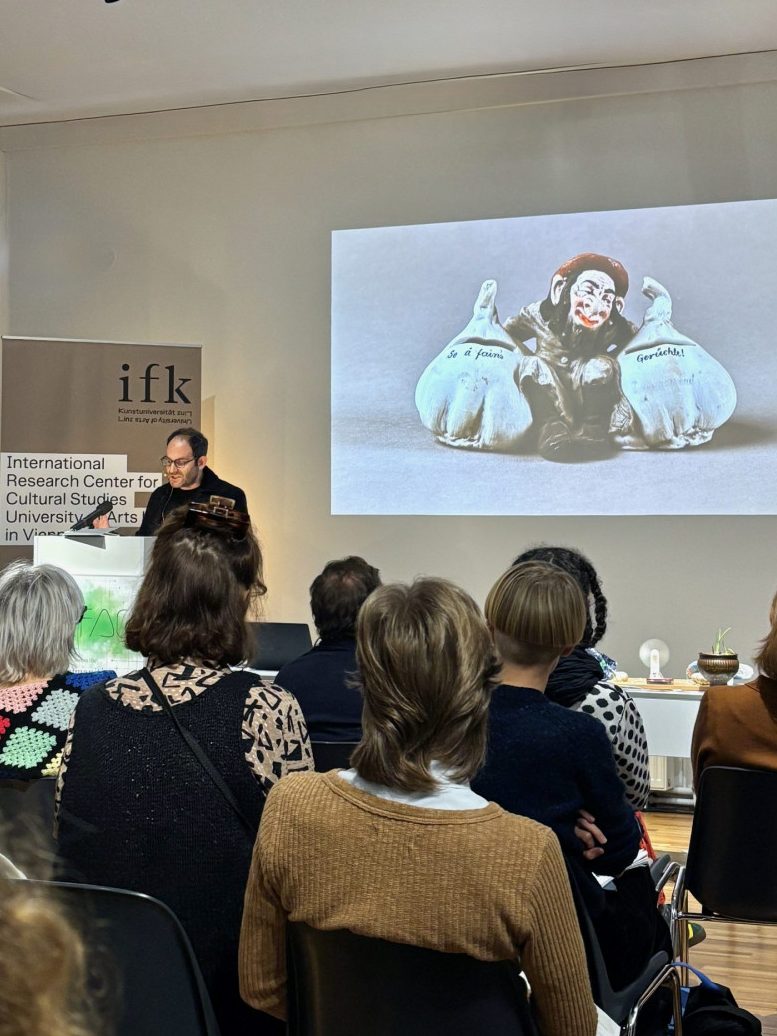
As he proposed garlic consumption as a mode of empowered civic resistance, he introduced a humorous yet incisive re-mapping of Vienna through what we might call its Freudian history and olfactory Unbehagen.
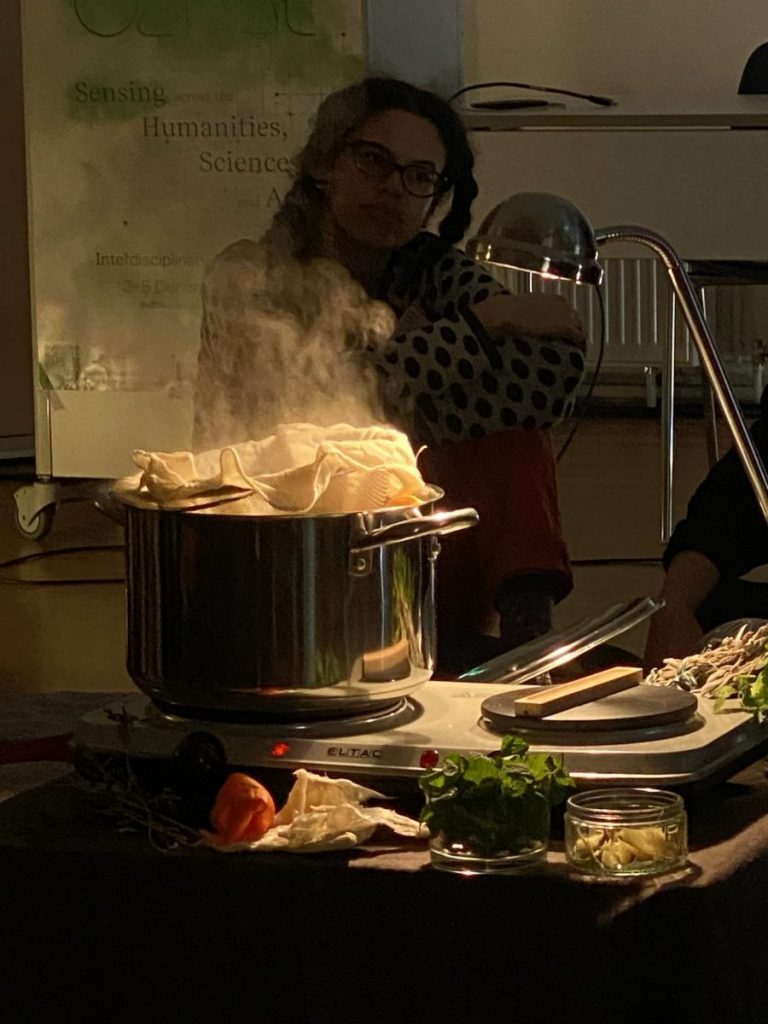
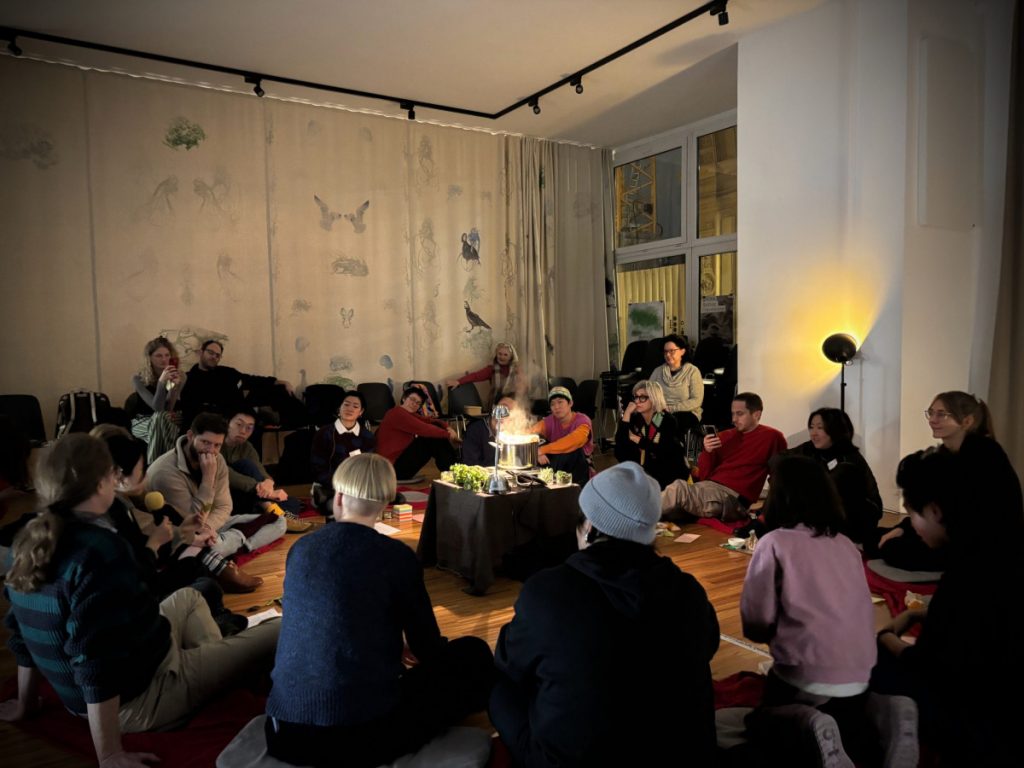
To close the first day, the symposium moved into a shared atmospheric experience. The Vienna-based collective Mai Ling presented Sharing Notes, a participatory performance that invited us to engage with scent ”as a temporal medium” (Mai Ling). Inspired by the historical use of incense clocks, the artists developed a nonlinear sensory encounter in which the burning, diffusing, and releasing of botanicals guided a meditation on time and relation. The room gradually filled with layered notes of winter citrus, herbs, and a faint trace of camphor—an olfactory thread that would reappear the following day. Read on in the next post!