

Sensing across the
Humanities, Sciences and Arts
Recap of the final Day of the OLFAC Symposium at the ifk, Vienna
DAY 3 – Essences Emerge
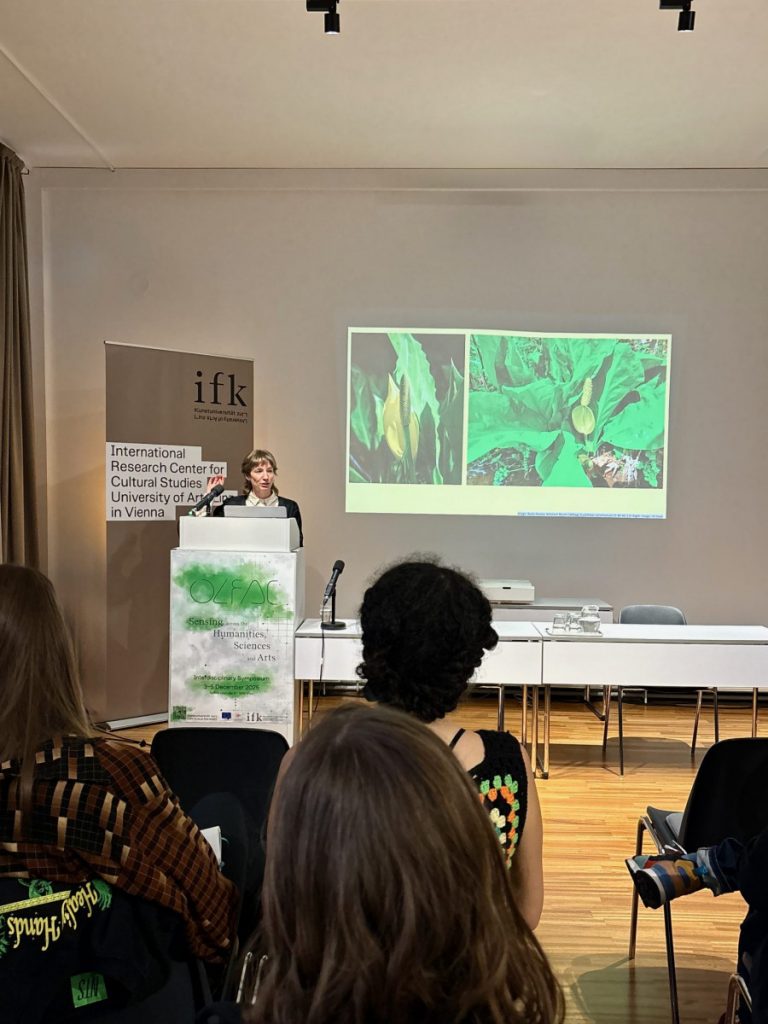
The final day of the OLFAC Symposium opened with a return to the body—though not only the human body. Lindsey French (Maine) began the morning with Putrid Intimacies in an Interspecies Commons, moving from mosquitos to the chemical architectures of plant signalling. By engaging with scents that repel, overwhelm, or confuse, Lindsey reframed olfaction as a space where intimacies unfold and ecological entanglement becomes palpable.
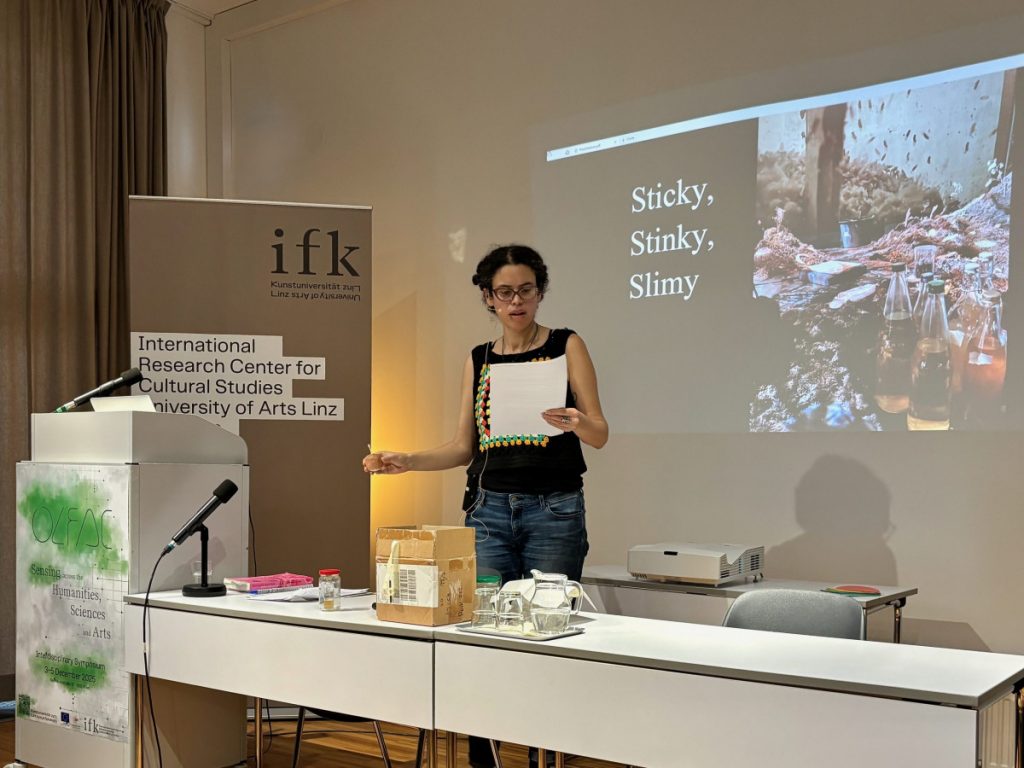
Alanna Lynch (Berlin) extended the theme of sensory disruption in Sticky, Stinky, Slimy. Alanna’s practice, grounded in biological materials and somatic experimentation, investigates the politics of abjection through smell, texture, and viscosity. Her lecture examined how ”bad smells” in artistic practice may or may not be able to unsettle sensory habits; and suggested that the labour of smelling, especially where cultural aversion accumulates, can open up forms of knowledge typically ruled out by convention.
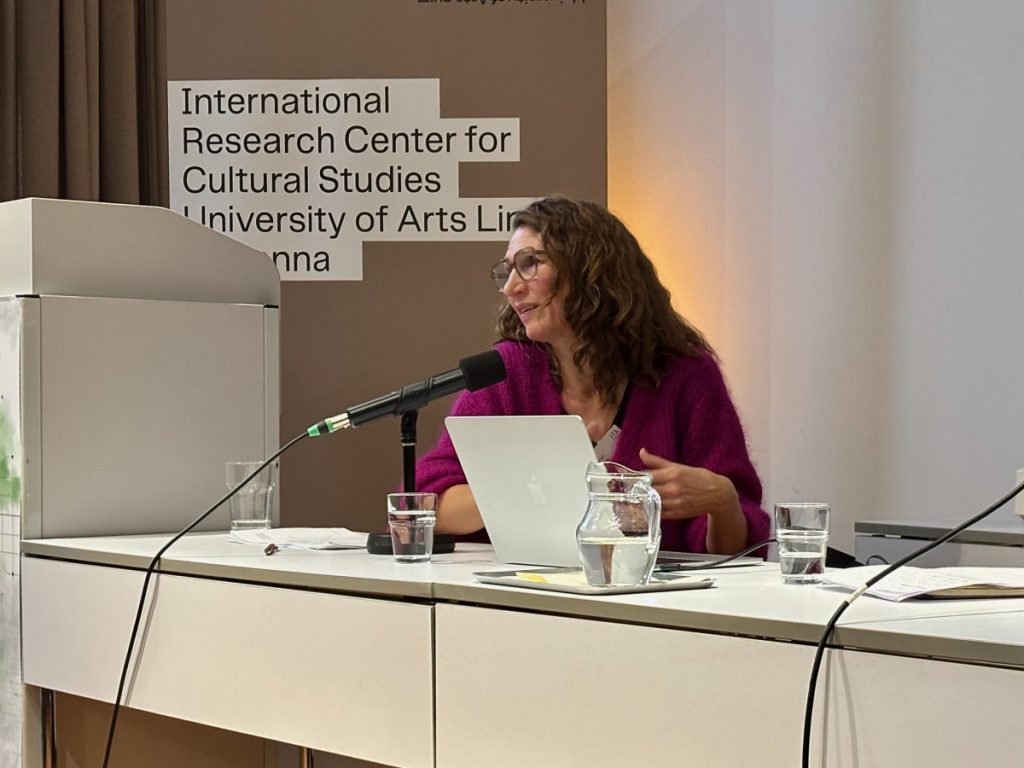
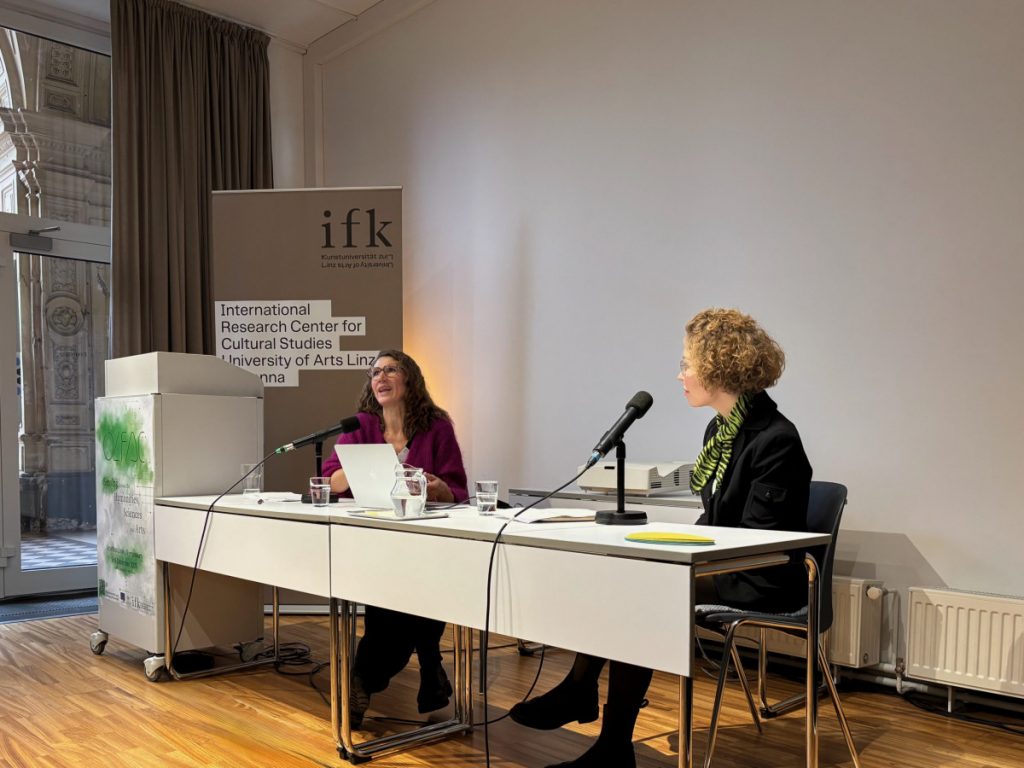
The midday session turned toward fungi and their atmospheres. In Tobacco, Tar, and Terpentine: The Universe of Fungal Scents, Sarah Kolb (Vienna) and Freda Fiala engaged in dialogue on the molecular, historical, and cultural worlds activated by fungal volatiles. Their conversation resonated with the SPORA exhibition on fungal worlds simultaneously on view downstairs at the ifk.
The afternoon shifted toward chemistry and cognitive science. Helene Loos (Nürnberg/Erlangen-Bonn) offered a broad and precise entry into Human Olfactory Communication: From Early Life Experiences to Adult Behaviour. A chemist working at the intersection of food science, sensory physiology, and airborne molecular communication, Helene guided usthrough the foundations of how odourants are detected, named, and classified. She traced early flavour learning, infant–caregiver bonding through smell, and the neurobiological underpinnings of social odours. Her talk also addressed the challenges of naming—how analytic systems struggle to stabilise the volatility of scent—and highlighted the methodological rigour required in such research practice.
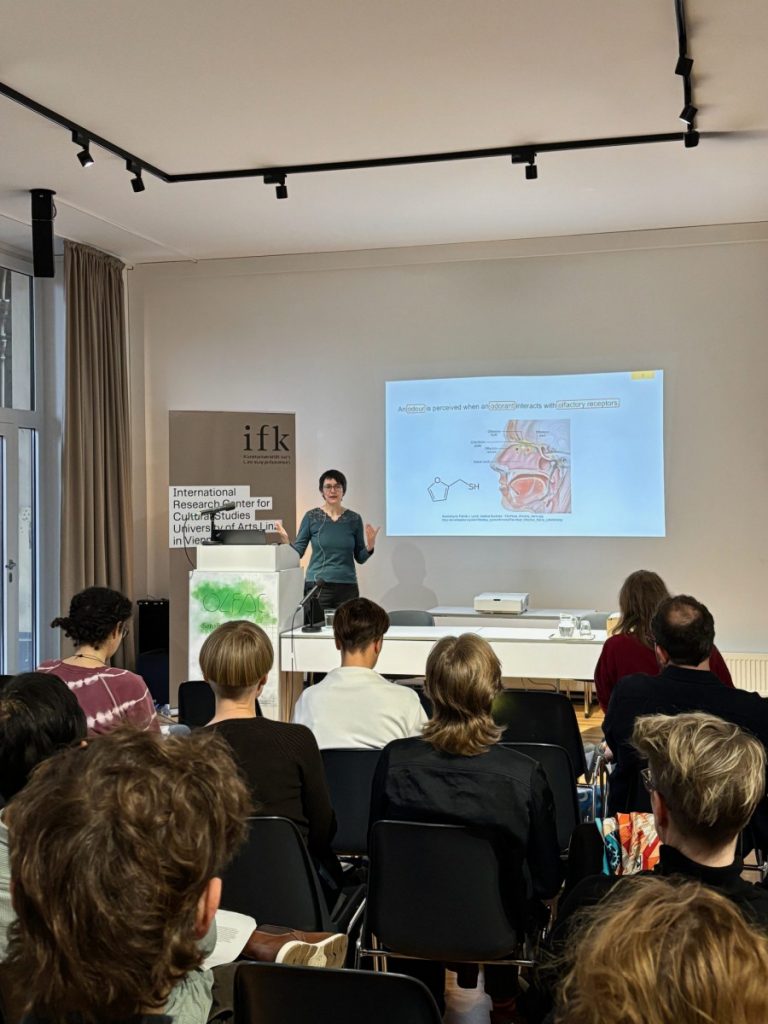
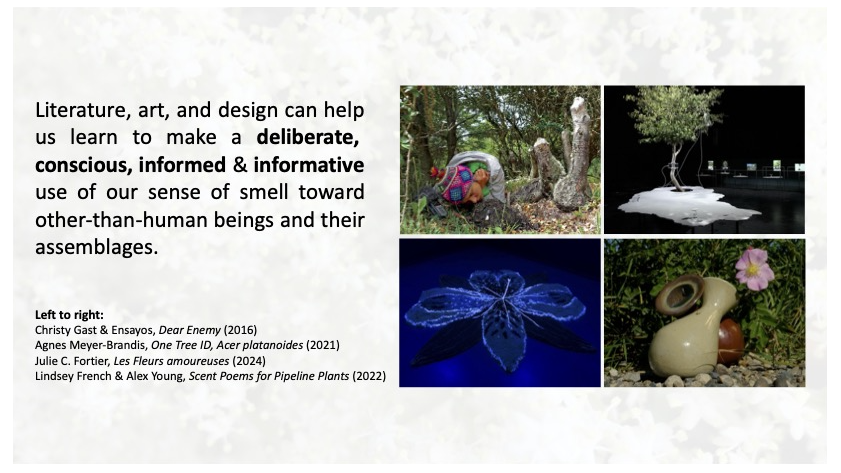
From here, the programme shifted back to the humanities. Clara Muller (Sancerre) presented Smelling Against Naturalist Ontology, drawing on Philippe Descola’s influential term to question how ”Western modernity” has reduced smell to what Clara addresses as ”an impoverished mode of sensing.” Turning to contemporary olfactory object design, she argued smell can redistribute the sensible by reactivating our perceptual bonds to other-than-human worlds. Smelling, in Clara’s account, becomes not merely a sensory act but a proposition for undoing the nature–culture divide and cultivating forms of ecological inclusion.
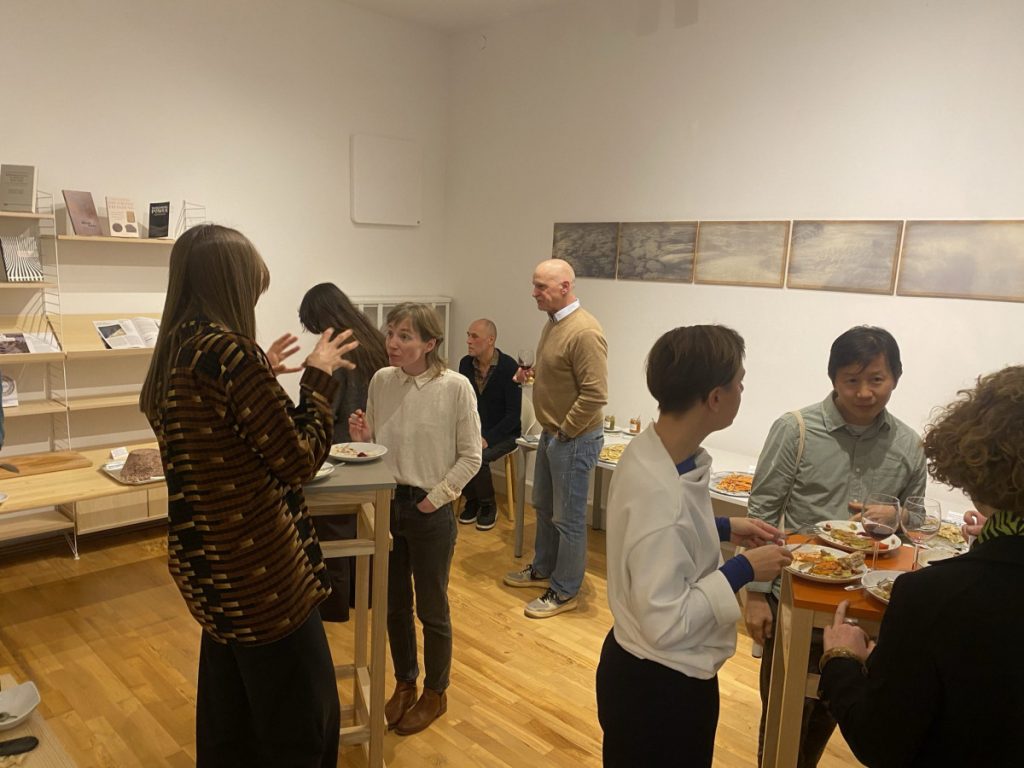
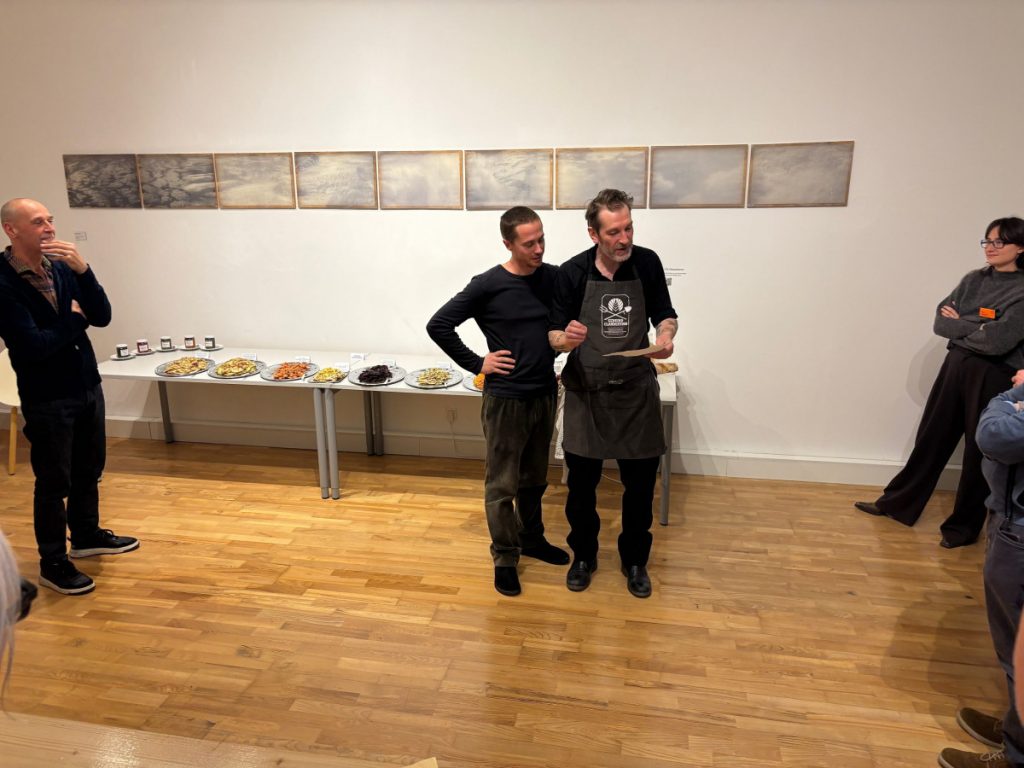
After a final round of discussion among speakers and organisers, the symposium closed with an edible performance by Ivan Fantini (Rimini). In recupero cura condivisione, Ivan assembled ingredients rescued from the brink of disposal, transforming what was nearly discarded into a shared moment of nourishment.
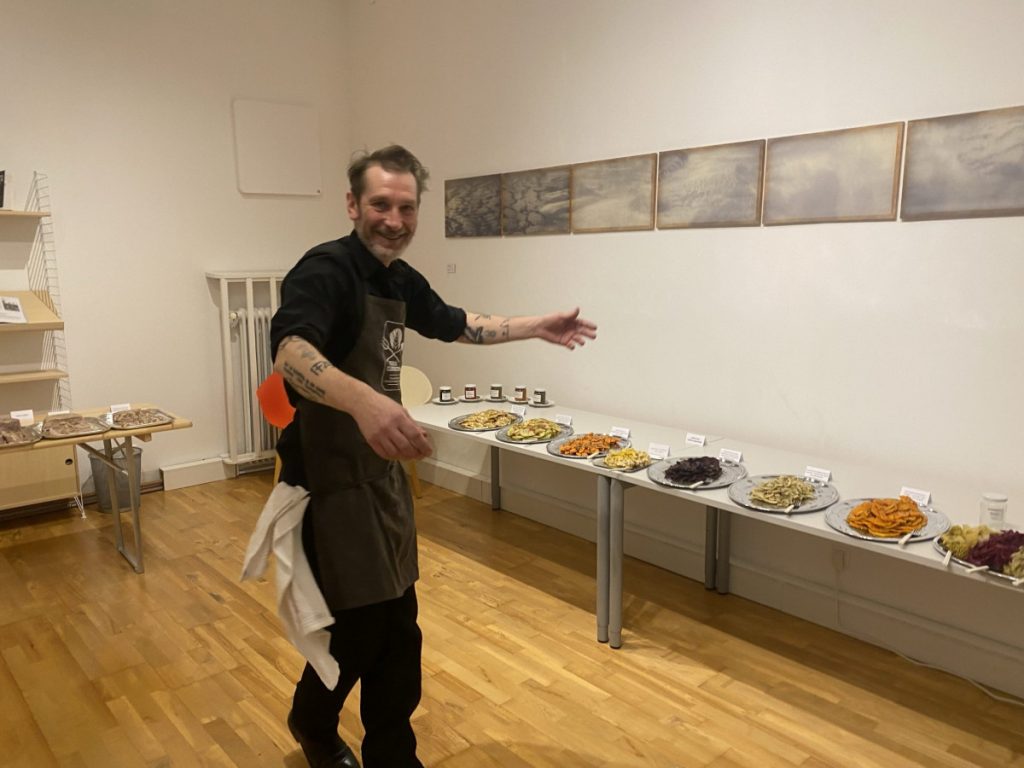
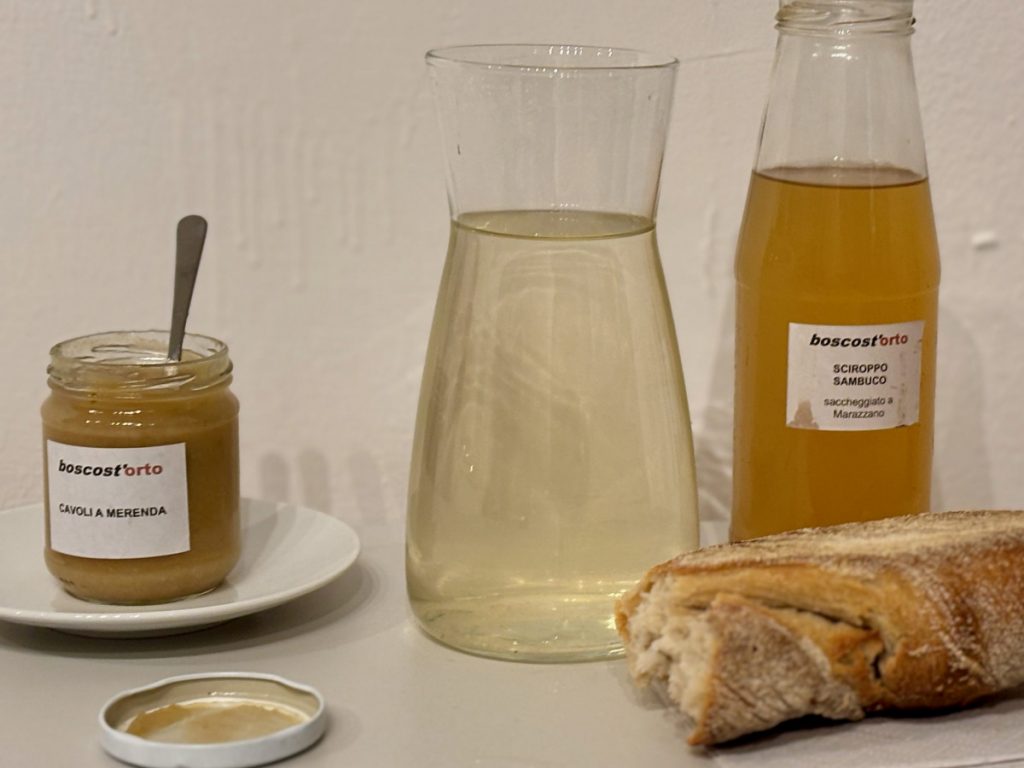
His gesture—grounded in anarchist ethics of reciprocity and resourcefulness—offered an understated reflection on planetary responsibility; folding care, recovery, and conviviality into the final hours of the symposium.
With it, the first OLFAC Symposium came to an end, leaving behind a thick and resonant layer of questions that will continue to shape the project’s work into 2026 and beyond.